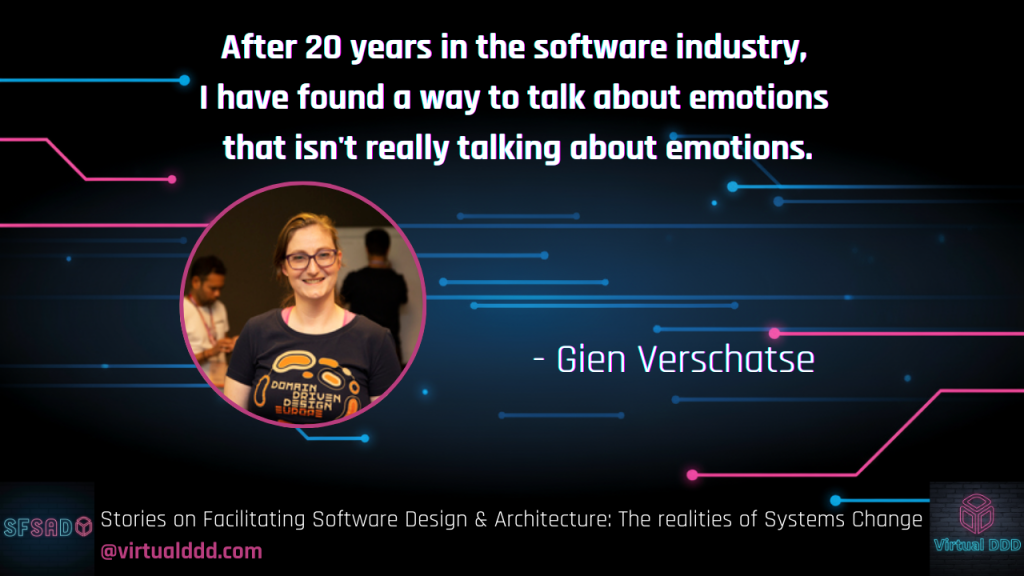
When someone pushes hard for a particular architectural approach, they're often expressing underlying values or fears rather than purely technical reasoning. By explicitly identifying these value-based heuristics—the principles actually driving their preference—you can have productive conversations about trade-offs without getting stuck in personality dynamics.
Example
In Gien's story, a developer pushed aggressively for implementing event sourcing in a legacy system. The strong reaction wasn't really about event sourcing's technical merits. It came from fear—fear that working in outdated technology would make their skills irrelevant, that they'd struggle to find their next job. The underlying value-based heuristic was something like "keeping my skills current is more important than addressing the team's immediate pain points." Once you can name that heuristic explicitly, you can discuss it: Is that the right priority? How else could we address that concern? What are other people's competing values?
Context
This approach works particularly well in male-dominated technical environments where talking directly about emotions triggers defensive reactions. Framing the conversation around values, heuristics, and preferences lets you address the emotional and human factors in decision-making without people feeling exposed or attacked. Most people haven't explicitly thought through their own values or the heuristics they use. Helping them articulate these creates space for understanding why people see things differently, and for making decisions that account for multiple perspectives rather than just the loudest voice.
When This Might Not Apply
– When the dominant voice has legitimate technical expertise that others lack—values discussion can feel like dismissal of valid concerns. – In highly time-constrained crisis situations where immediate action trumps deep emotional exploration.
Variations
– For remote sessions: Use anonymous polling tools (like Mentimeter) to surface values before naming them publicly. – When working with executives: Frame as "strategic priorities" rather than personal values to maintain credibility.