Heuristics
Watch for approval-seeking as a safety signal
How can you tell if hierarchy is preventing honest collaboration in a modeling session?
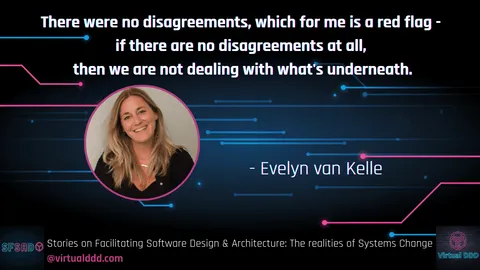
When participants in a collaborative modeling session keep asking specific people for approval before taking any action, even moving a sticky note, hierarchy and rank are dominating the session. This approval-seeking behavior signals that people don’t feel safe to contribute their own thinking. The absence of disagreement and hotspots further confirms that real concerns are staying hidden.
Example
During an event storming session at a hierarchical organization, everyone asked for approval to move stickies from people who were high up in rank. Conversations stayed at a high level, there were no disagreements, and no hotspots appeared on the board. The facilitators had to work unusually hard to get anything moving. These signals together indicated that hierarchy was preventing the group from surfacing actual complexity or uncertainty.
Context
Approval-seeking doesn’t always look like explicitly asking permission. It can show up as people glancing at certain individuals before speaking, waiting for those individuals to speak first, or immediately deferring when those people disagree. When combined with lack of hotspots and disagreements, you’re likely seeing politeness theater rather than actual collaborative sense-making.
When This Might Not Apply
In highly regulated or safety-critical environments (healthcare, aviation), seeking approval before changes can be appropriate professional behavior rather than a sign of psychological unsafety. Some cultures also have norms around deference to authority that aren’t the same as fear; observe whether people express genuine thoughts in private or with peers before concluding that hierarchy is blocking authentic collaboration.
Variations
-
In remote sessions: Watch for hesitation before speaking, typing and deleting messages without sending, or waiting for high-rank people to speak first in chat
-
With silent dominators: Some high-rank people create approval-seeking through presence alone (folded arms, not smiling) rather than active intervention; the effect is the same
-
Early in sessions: Approval-seeking often decreases as groups warm up; if it persists throughout, hierarchy is actively blocking, not just present
-
When high-rank people are absent: Run the same modeling activity and observe whether approval-seeking disappears and disagreements emerge; this confirms hierarchy as the blocker
Related Concepts
-
Amy Edmondson, Psychological Safety and Learning in Organizations — Approval-seeking is the inverse of the “voice and influence” dimension of psychological safety
-
Lean and DevOps research on organizational culture — Organizations with high approval-seeking behaviors show lower deployment frequency and higher change failure rates regardless of technical capability
Discussed in